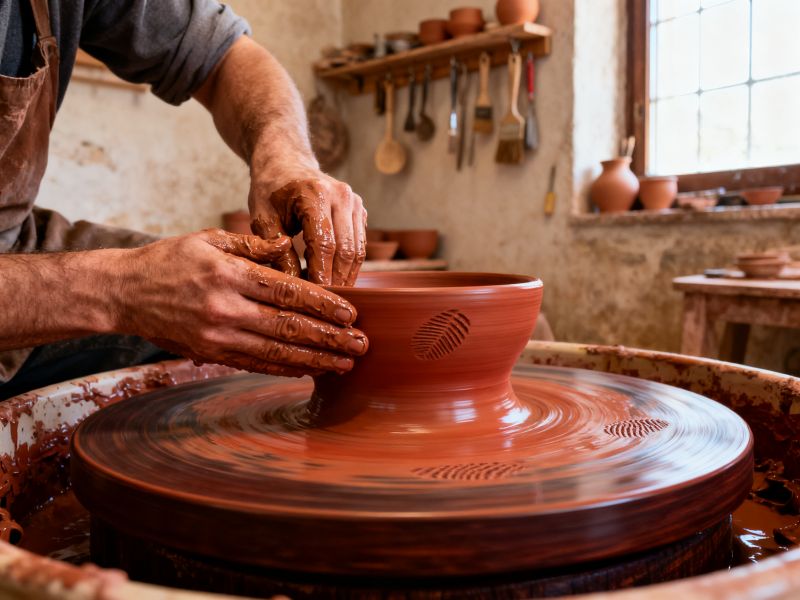
Walk into any trattoria in Montepulciano and you'll likely eat off it. The reddish-brown clay, fired hard and glazed just enough to hold a ribollita, has been under Tuscan food for centuries. Cotto — literally "cooked" in Italian — refers to terracotta that's been baked at high temperatures, and it's the material behind everything from roof tiles to wine amphorae to the humble floor of a farmhouse kitchen. What's surprising is how little most people know about it。even as it quietly stages a comeback in contemporary design.I first noticed the resurgence in a small workshop outside Siena, where a third-generation potter was shaping a basin by hand. He told me that cotto wasn't always cheap. In the 15th century, fine cotto from Impruneta was shipped across Europe;the Medici family used it for garden urns that still stand today. The key is the local clay — rich in iron and lime, it fires to a warm, almost rosy hue that synthetic materials can't replicate. Modern manufacturers often blend clays from different regions。but traditionalists insist on single-origin cotto. The difference shows in the finish: a subtle variation in tone that feels alive, not stamped out.Durability is another reason cotto keeps winning fans. A properly sealed cotto floor can last generations, and unlike porcelain tile。it doesn't chip easily. I've seen cotto pavers in a 19th-century villa that had worn smooth as river stones but showed no cracks. That resilience comes at a cost — cotto is porous and needs regular sealing, and installation is labor-intensive. Still, for restoration projects, nothing else matches the look. Architects I've spoken to say clients often ask for "that old Italian floor," and cotto is the only answer that doesn't feel like a fake.The market reality is messier. Genuine hand-made cotto from small Italian kilns can cost three to four times more than machine-pressed imports. That gap has led to a flood of lookalikes — some decent, many not. A friend who renovates farmhouses in Puglia told me he now tests samples by soaking them overnight;
cheap cotto absorbs water like a sponge and crumbles after a few winters. He's switched to a co-op in Grottaglie that stamps each tile with the maker's initials. That kind of traceability is rare, but it's exactly what buyers should demand if they want cotto that ages well.Where does cotto go from here?
The green building movement has given it an unexpected boost: it's low-fired compared to porcelain, uses abundant clay, and can be recycled. A few startups in Emilia-Romagna are experimenting with solar kilns to cut emissions further. I'm skeptical of grand claims — cotto production still requires significant energy — but the material's honesty appeals to a generation tired of plastic laminates. If you're considering cotto for a floor or a planter, my advice is simple: buy less。buy real, and learn to love the imperfections. Those hairline cracks and color shifts aren't flaws. They're the record of a material that's been cooked, literally, into the story of Italian living.