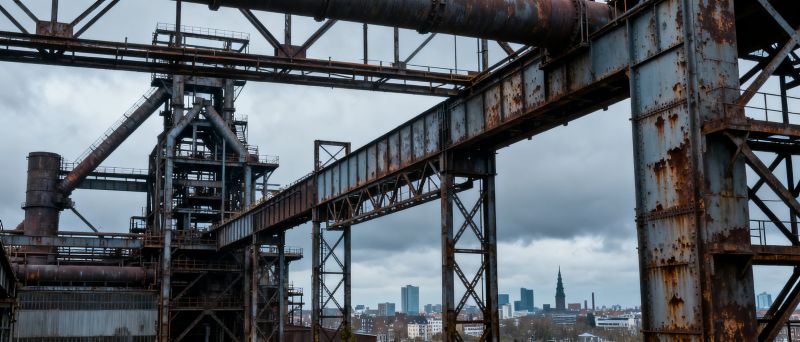
Driving into Middlesbrough from the A19, you're greeted by the looming skeleton of the old steelworks—a rusting monument to a time when this town forged half the world's bridges. That sight used to depress me. Now I see it differently: as a stubborn refusal to vanish. Middlesbrough has been written off more times than I can count, yet it keeps grinding on, much like the blast furnaces that once lit the night sky. The town's identity is welded to heavy industry, and the closure of the SSI steel plant in 2015 hit harder than any economic statistic can convey. Walking through the remnants of Teesside's industrial heartland。you feel the weight of that loss—empty warehouses, shuttered pubs, the eerie quiet of a place that once roared. But here's the thing: Middlesbrough didn't curl up and die. It adapted, sometimes clumsily, often painfully, but always with a blunt Teesside humour that outsiders rarely grasp.Take the town centre. For years, it was a ghost town of discount stores and boarded-up windows. Then came the regeneration push—some of it genuinely impressive, like the refurbished Middlesbrough Institute of Modern Art (mima)。
which sits oddly proud among the charity shops. I wandered in on a rainy Tuesday and found a surprisingly sharp exhibition on post-industrial landscapes. The irony wasn't lost on me. Outside, the Cleveland Centre struggles to fill units, but new independent cafes are popping up along Linthorpe Road. A barista there told me, "People round here don't give up easy. We've had nowt for so long, we've learned to make our own fun." That phrase stuck with me. It's the unofficial motto of Middlesbrough—make do, or make something better.Transport tells its own story. The town's train station, a grand Victorian structure, feels like a forgotten gateway. Trains to Newcastle and York are frequent enough, but the local bus network is patchy, and driving is still king. I hired a car to explore the outskirts—specifically Acklam and Marton, where suburban streets give way to surprisingly green spaces. Stewart Park, with its captured orangutan statue (a nod to Middlesbrough-born explorer Jim Corbett?No, actually it's a memorial to local philanthropist Henry Bolckow—get the facts right), offers a slice of calm. On a Saturday morning, dog walkers and kids on scooters share the paths with minimal fuss. It's not the dystopian image some southern newspapers paint. Middlesbrough has pockets of real beauty。if you bother to look.Then there's the food. Forget the stereotypes about parmos (though yes, they're everywhere, and yes, they're glorious). The town's food scene is quietly diverse—a Lebanese bakery near the university, a proper old-school pie shop off North Ormesby, and a Nepalese restaurant that would hold its own in any city. I ate at a place called The Fork in the Road, a community-run café that trains people with learning disabilities. The soup was decent;the sense of purpose was extraordinary. Middlesbrough's social fabric is frayed but not torn. Volunteers run food banks, youth clubs, and even a repair café in the former bus station. These aren't grand gestures—they're small。persistent acts of care. And they matter more than any government Levelling Up brochure.
Would I move to Middlesbrough?Honestly, I'm not sure. The town has real problems—unemployment, health inequalities, a lingering sense of being left behind. But it also has a raw, unpolished authenticity that's increasingly rare. The people I met didn't sugarcoat the difficulties;
they just got on with it. That's the Middlesbrough way. No fuss。no self-pity, just a quiet determination to keep the lights on and the kettle boiling. The steelworks may be gone, but the spirit forged there—tough, warm, and stubbornly optimistic—remains. You won't find it in a tourist guide, but spend a few days here, talk to the locals, and you'll feel it. Middlesbrough doesn't ask for your sympathy. It asks for your attention.